

 English
 China
China Thailand
 Malaysia
 Vietnam
 Laos
Laos Cambodia
 Pilipinas
 Indonesia
 Russian
 Portuguese
 Arabic
 Japanese
 Spanish
 Italian
 French
 German
News
- Home
- News
- Company News
The use of road delineators, particularly in the form of posts, has become a critical component in enhancing night visibility on roads, ensuring safer travel for all users. This report delves into the significance of road delineator posts in improving nighttime driving conditions, focusing on their design, placement, and overall impact on road safety.
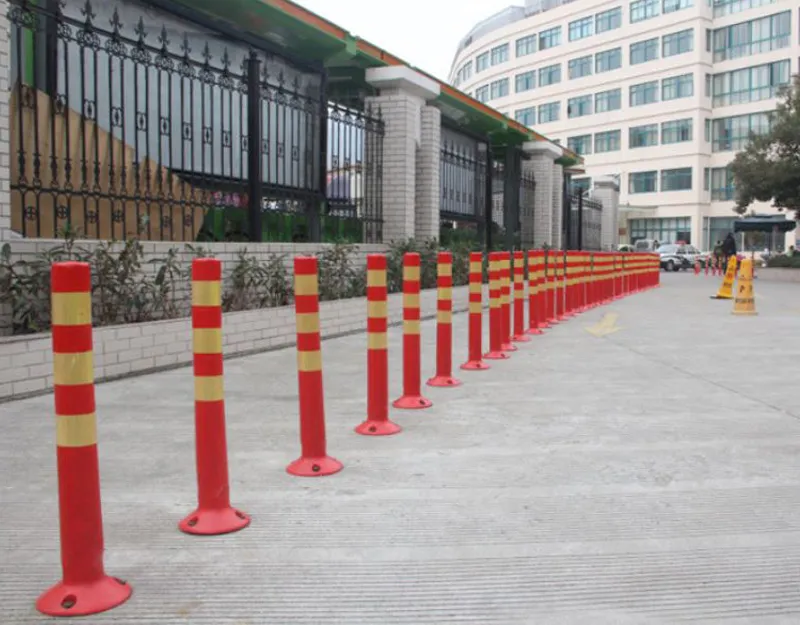
Road delineator posts are specifically engineered to provide clear visual guidance to drivers during low-visibility conditions, such as at night or in adverse weather. These devices are typically made from durable materials that can withstand harsh environmental conditions, including UV radiation, extreme temperatures, and physical impacts. The reflective surfaces on these posts are key to their effectiveness; they are designed to reflect light back to its source, making them highly visible to drivers. This reflective capability is achieved through the use of retroreflective sheeting, which is applied to the surface of the post. The angle at which this sheeting reflects light is optimized to ensure maximum visibility, even when viewed from a distance or at an oblique angle. Additionally, some modern designs incorporate LED lights, which can be powered by solar energy, further enhancing their visibility and reducing maintenance costs. The combination of these features makes road delineator posts an indispensable tool for improving night visibility and, consequently, road safety.
The strategic placement of road delineator posts is crucial for maximizing their effectiveness in enhancing night visibility. These posts should be positioned along the edges of the road, especially in areas where there is a lack of street lighting or where the road alignment changes, such as curves or intersections. In urban environments, they can also be used to mark pedestrian crossings, bike lanes, and other important road features. The spacing between posts is another critical factor; they should be placed close enough together to create a continuous line of sight for drivers but not so close that they clutter the roadside. Generally, a spacing of 30 to 50 meters is recommended, depending on the specific road conditions and traffic speeds. By following these placement guidelines, road delineator posts can significantly reduce the risk of accidents caused by poor visibility, thereby contributing to a safer and more efficient transportation system.
The primary function of road delineator posts is to enhance night visibility, which in turn improves road safety. Studies have shown that the presence of these posts can reduce the number of nighttime accidents by up to 40%. This is because they help drivers to better perceive the road layout, especially in low-visibility conditions. The reflective surfaces and, in some cases, the LED lights, make it easier for drivers to see the edges of the road, navigate curves, and avoid obstacles. Moreover, road delineator posts can also serve as a psychological deterrent, encouraging drivers to stay within their lane and maintain a safe speed. This is particularly important in rural areas where roads may be less well-lit and where the risk of wildlife collisions is higher. By providing a clear and consistent visual guide, road delineator posts play a vital role in reducing the likelihood of accidents and saving lives.
In addition to their safety benefits, road delineator posts also offer economic and environmental advantages. From an economic perspective, the installation and maintenance of these posts are relatively cost-effective compared to other road safety measures, such as installing additional street lighting. The use of solar-powered LED lights in some designs further reduces operational costs, as they do not require any external power source. Environmentally, road delineator posts have a minimal impact. They are typically made from recyclable materials, and their long lifespan means that they do not need to be frequently replaced. Furthermore, the use of solar energy in some models contributes to a reduction in carbon emissions, aligning with broader sustainability goals. By considering both the economic and environmental aspects, road delineator posts present a sustainable and cost-effective solution for enhancing night visibility and road safety.
As technology continues to advance, the future of road delineator posts looks promising. One area of development is the integration of smart technology, such as sensors and communication systems, into these posts. For example, posts could be equipped with sensors that detect the presence of vehicles and pedestrians, and then communicate this information to nearby drivers via wireless signals. This would allow for real-time adjustments in driving behavior, further enhancing safety. Additionally, advancements in material science may lead to the creation of even more durable and reflective materials, increasing the longevity and effectiveness of these posts. The potential for innovation in this field is vast, and ongoing research and development will continue to drive improvements in the design and functionality of road delineator posts, ultimately leading to safer and more efficient roadways.
In conclusion, road delineator posts play a crucial role in enhancing night visibility and improving road safety. Their design, optimal placement, and significant impact on reducing accidents make them an essential tool for transportation infrastructure. As technology advances, the potential for further improvements in their design and functionality is vast, ensuring that road delineator posts will continue to be a vital component in creating safer and more efficient roadways.






Leave a Reply