

 English
 China
China Thailand
 Malaysia
 Vietnam
 Laos
Laos Cambodia
 Pilipinas
 Indonesia
 Russian
 Portuguese
 Arabic
 Japanese
 Spanish
 Italian
 French
 German
News
- Home
- News
- Company News
water filled traffic barriers have become an increasingly popular solution for enhancing road safety and managing traffic flow. These innovative devices are designed to offer a flexible yet robust method of separating lanes, protecting pedestrians, and reducing the severity of accidents. This report explores the role of water filled traffic barriers in mitigating traffic accidents, focusing on their design, deployment, and effectiveness.
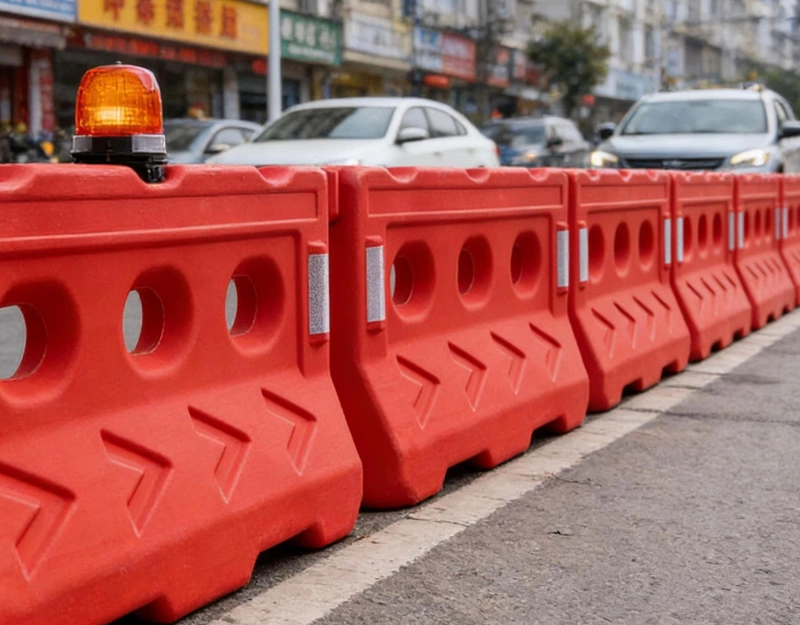
Water filled traffic barriers, also known as plastic jersey barriers, are made from high-density polyethylene (HDPE) or similar durable materials. They are hollow and can be filled with water or sand to provide stability and weight. The primary function of these barriers is to create a physical separation between different traffic flows, such as opposing lanes on a highway, or to delineate pedestrian areas from vehicular traffic. Their modular design allows for easy installation and relocation, making them ideal for both temporary and permanent use.
One of the key advantages of water filled traffic barriers is their ability to absorb and dissipate energy upon impact. When a vehicle collides with a barrier, the water inside helps to cushion the blow, reducing the force transmitted to the vehicle and its occupants. This characteristic significantly lowers the risk of serious injuries and fatalities in the event of a collision.
The strategic placement of water filled traffic barriers is crucial for maximizing their effectiveness in reducing traffic accidents. High-risk areas, such as construction zones, urban intersections, and high-speed highways, benefit greatly from the presence of these barriers. In construction zones, they provide a clear and visible demarcation between the work area and the active traffic lanes, ensuring that workers and drivers remain safe. Additionally, they can be used to channelize traffic, guiding vehicles through narrow or complex layouts without compromising safety.
In urban environments, water filled traffic barriers are often deployed at busy intersections and pedestrian crossings. By creating a physical barrier, they prevent vehicles from encroaching on pedestrian spaces, thereby reducing the likelihood of pedestrian-vehicle collisions. Moreover, these barriers can be easily adjusted to accommodate changes in traffic patterns or to respond to emerging safety concerns, making them a versatile tool for urban traffic management.
Studies have shown that water filled traffic barriers are highly effective in reducing the severity of traffic accidents. One of the main reasons for this is their energy-absorbing properties. When a vehicle strikes a Water Filled Barrier, the water inside acts as a shock absorber, distributing the impact force over a larger area and reducing the deceleration experienced by the vehicle. This not only minimizes damage to the vehicle but also reduces the risk of injury to the occupants.
Furthermore, the visibility of water filled traffic barriers contributes to their effectiveness. The bright colors and reflective markings on these barriers make them highly visible, even in low-light conditions. This increased visibility alerts drivers to the presence of the barrier, giving them more time to react and avoid a collision. In many cases, the mere presence of a clearly visible barrier is enough to deter drivers from risky behaviors, such as speeding or weaving between lanes.
Another important aspect of water filled traffic barriers is their ability to be quickly deployed and removed. In emergency situations, such as natural disasters or major accidents, these barriers can be rapidly set up to redirect traffic and secure the scene. This rapid response capability is critical for maintaining order and safety in dynamic and unpredictable situations.
Water filled traffic barriers play a vital role in reducing traffic accidents and enhancing overall road safety. Their design, which combines durability with energy absorption, makes them an effective tool for managing traffic flow and protecting both drivers and pedestrians. By strategically deploying these barriers in high-risk areas and leveraging their visibility and flexibility, transportation authorities can significantly reduce the frequency and severity of traffic accidents. As technology continues to advance, it is likely that water filled traffic barriers will become even more integral to modern traffic management systems, further contributing to safer and more efficient roadways.


Leave a Reply