

 English
 China
China Thailand
 Malaysia
 Vietnam
 Laos
Laos Cambodia
 Pilipinas
 Indonesia
 Russian
 Portuguese
 Arabic
 Japanese
 Spanish
 Italian
 French
 German
News
- Home
- News
- Company News
With the increasing frequency and intensity of extreme weather events, coastal areas are facing unprecedented challenges. Traditional methods of coastal protection, such as concrete seawalls or rock revetments, have proven to be effective but often come with high costs and environmental impacts. In this context, welded gabions emerge as a promising alternative, offering robust and sustainable solutions for enhancing coastal resilience. This report explores the application of welded gabions in coastal protection, focusing on their structural integrity, environmental benefits, and long-term sustainability.
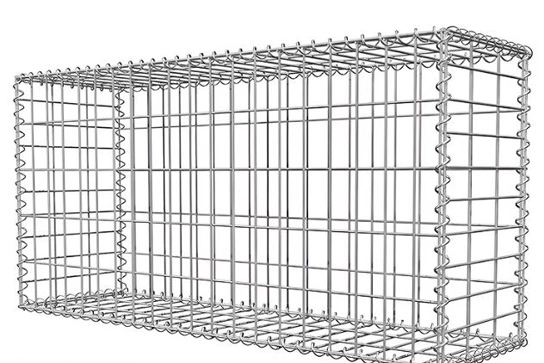
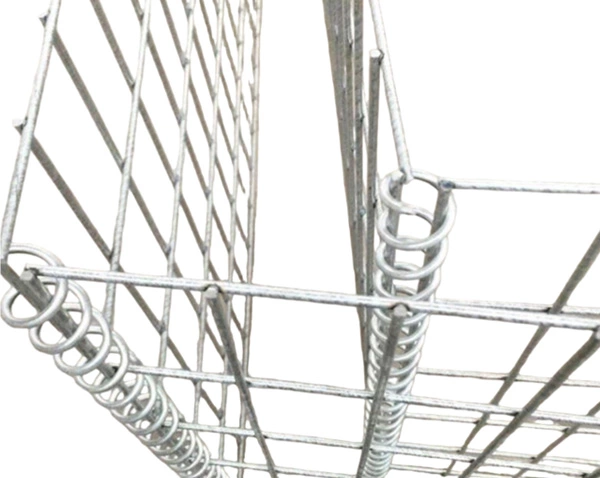
The primary advantage of using welded gabions for coastal protection lies in their superior structural integrity. Unlike traditional woven wire gabions, which rely on the friction between individual wires to maintain their shape, welded gabions are constructed by welding the intersections of the wire mesh. This results in a more rigid and stable structure that can withstand higher loads and resist deformation under stress. The increased rigidity of welded gabions makes them particularly suitable for high-energy environments, such as those found along coastlines exposed to strong waves and currents.
Moreover, the use of high-quality materials, such as galvanized steel or stainless steel, further enhances the durability of welded gabions. These materials provide excellent corrosion resistance, ensuring that the structures remain intact even in harsh marine environments. The combination of robust construction and durable materials ensures that welded gabions can provide long-lasting protection against erosion and storm surges, thereby reducing the need for frequent maintenance and repairs.
One of the key advantages of welded gabions is their potential to integrate with the local ecosystem, promoting biodiversity and ecological balance. Unlike solid structures like concrete seawalls, which create a barrier between the land and the sea, welded gabions allow for the natural exchange of water and sediment. This permeability supports the growth of vegetation and the establishment of habitats for various marine and terrestrial species. Over time, the Gabion Structures can become colonized by plants, creating a living shoreline that not only provides physical protection but also enhances the ecological value of the area.
Additionally, the use of natural stone or other locally sourced materials within the gabion baskets can help to blend the structures with the surrounding environment, reducing their visual impact. This approach aligns with the principles of eco-engineering, which seeks to create infrastructure that is both functional and environmentally friendly. By integrating welded gabions into coastal protection schemes, it is possible to achieve a balance between human needs and ecological preservation, contributing to the overall health and resilience of coastal ecosystems.
While the initial cost of installing welded gabions may be comparable to that of traditional coastal protection methods, the long-term benefits make them a more cost-effective solution. The durability and low maintenance requirements of welded gabions mean that they require fewer resources over their lifespan, resulting in lower operational costs. Additionally, the flexibility of gabion structures allows for easy adaptation to changing conditions, such as rising sea levels or shifting shorelines. This adaptability reduces the need for costly and disruptive reconstruction, making welded gabions a more sustainable choice in the long run.
Furthermore, the modular nature of welded gabions facilitates efficient installation and repair. Individual sections can be easily replaced or reinforced as needed, without the need for extensive demolition and reconstruction. This modularity also allows for phased implementation, enabling coastal managers to address the most critical areas first and gradually expand the protection system as resources become available. The combination of lower maintenance costs, adaptability, and modular design makes welded gabions a financially viable and sustainable option for coastal protection.
In conclusion, welded gabions offer a robust and sustainable solution for enhancing coastal protection. Their structural integrity, environmental benefits, and long-term sustainability make them an attractive alternative to traditional methods. By providing a combination of physical protection and ecological integration, welded gabions contribute to the overall resilience and health of coastal ecosystems. As the demand for effective and sustainable coastal protection continues to grow, the adoption of welded gabions is likely to increase, offering a promising path forward for coastal communities around the world.
Leave a Reply