

 English
 China
China Thailand
 Malaysia
 Vietnam
 Laos
Laos Cambodia
 Pilipinas
 Indonesia
 Russian
 Portuguese
 Arabic
 Japanese
 Spanish
 Italian
 French
 German
News
- Home
- News
- Company News
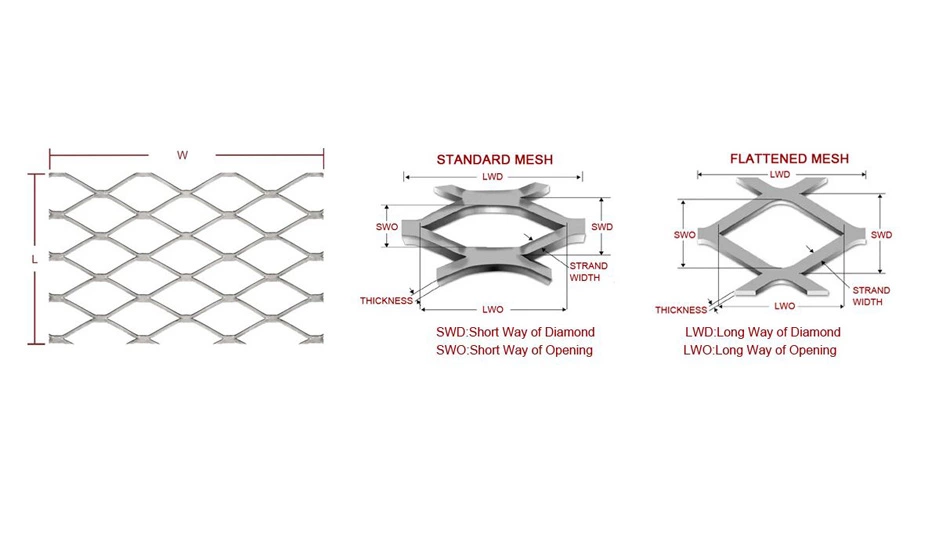
Aluminum expanded mesh, a versatile and increasingly popular material in the construction and manufacturing industries, represents an innovative approach to creating lightweight yet strong structures. This comprehensive overview delves into the latest advancements in Aluminum Expanded Mesh technology, exploring its applications, benefits, and future potential. By examining the production process, environmental impact, and practical uses across various sectors, this report aims to provide a thorough understanding of how aluminum expanded mesh is transforming modern engineering and design practices. Furthermore, it discusses the challenges faced during implementation and offers insights into overcoming these obstacles, making it a valuable resource for professionals and enthusiasts alike.
The creation of aluminum expanded mesh involves a series of precise steps that start with selecting high-quality raw materials. One of the most significant advancements in recent years has been the development of automated cutting and stretching machines, which can produce intricate patterns with minimal waste. These machines use computer-aided designs (CAD) to ensure each piece meets exact specifications, enhancing both efficiency and accuracy. Additionally, new techniques such as laser cutting have been introduced, allowing for even finer detail and customization options in the final product.
Aluminum expanded mesh boasts several advantageous properties that make it ideal for a wide range of applications. Firstly, it is incredibly lightweight, reducing transportation costs and easing installation processes. Despite its lightness, it maintains impressive strength and durability, capable of withstanding harsh environmental conditions without deteriorating. Moreover, its corrosion-resistant nature ensures longevity, while also being easy to clean and maintain. The unique structure of the mesh allows for excellent ventilation, making it suitable for use in architectural facades, fencing, and even soundproofing solutions.
One of the key advantages of using aluminum expanded mesh from an environmental perspective is its recyclability. Aluminum is one of the most recycled materials globally, and products made from it can be easily repurposed at the end of their lifecycle. This not only reduces landfill waste but also decreases the demand for virgin materials, thereby conserving natural resources. In addition, the production process for aluminum expanded mesh generates less CO2 compared to many other metal fabrication methods, further contributing to its eco-friendly credentials.
Beyond its own production, aluminum expanded mesh plays a crucial role in promoting energy efficiency when used in building designs. For instance, when integrated into façade systems, it can help regulate indoor temperatures by providing shade and reducing solar heat gain. This leads to lower air conditioning usage, resulting in significant energy savings over time. Similarly, in industrial settings, it can be utilized as part of cooling tower or ventilation system designs, improving overall operational efficiency while minimizing environmental footprint.
In the realm of construction and architecture, aluminum expanded mesh is being increasingly adopted due to its aesthetic appeal and functional benefits. Architects often incorporate it into their designs to create visually striking exteriors that stand out. It can be used for cladding, balustrades, and decorative panels, offering architects creative freedom to experiment with different textures and patterns. Besides its visual qualities, it also provides structural support, adding to the safety and stability of buildings. Its versatility makes it a preferred choice for both residential and commercial projects.
The automotive and aerospace industries are also recognizing the potential of aluminum expanded mesh. In cars, it serves multiple purposes, including reinforcing body parts, acting as a protective barrier against road debris, and improving aerodynamics through its lightweight nature. In aerospace, where weight reduction is critical, it finds application in aircraft interiors, cargo holds, and even exterior components. Its ability to combine strength with minimal mass makes it particularly attractive for these high-performance fields, helping to reduce fuel consumption and increase payload capacity.
While there are numerous benefits associated with aluminum expanded mesh, cost remains a significant consideration for many users. The initial investment required for specialized machinery and skilled labor can be substantial, potentially deterring smaller businesses or those on tight budgets. However, it's important to note that long-term savings can offset these upfront expenses. For example, the durability and low maintenance requirements of the material mean that replacement and repair costs will be lower over time. Additionally, as technology advances and production scales up, prices are expected to become more competitive, making it accessible to a broader market.
Proper installation and regular maintenance are essential for ensuring the optimal performance of aluminum expanded mesh. Improper fitting can lead to issues such as warping or weakening of the structure, which may compromise its integrity. Therefore, it is advisable to consult with experienced professionals who understand the specific requirements of different applications. Regarding maintenance, although the material itself is highly resistant to rust and corrosion, occasional cleaning and inspection are still necessary to remove any accumulated dirt or debris. Regular upkeep not only extends the lifespan of the mesh but also helps maintain its appearance and functionality.
As we move towards a more connected world, the integration of smart technologies with traditional materials like aluminum expanded mesh becomes increasingly relevant. Researchers are exploring ways to embed sensors and other electronic components directly into the mesh, enabling real-time monitoring and control of various parameters. For example, in smart buildings, such systems could automatically adjust lighting or temperature based on external conditions, optimizing energy usage and occupant comfort. This convergence of materials science and information technology opens up exciting possibilities for creating smarter, more responsive environments.
Nanotechnology is another frontier that holds promise for further enhancing the properties of aluminum expanded mesh. Scientists are investigating the use of nanomaterials to improve aspects such as conductivity, thermal resistance, and mechanical strength. By incorporating nanoparticles into the aluminum alloy, it may be possible to develop meshes with enhanced functionalities, such as self-cleaning surfaces or improved fire resistance. While still in the experimental stage, these innovations could revolutionize the way we think about and utilize aluminum expanded mesh in the future, paving the way for even more diverse and sophisticated applications.


Leave a Reply