

 English
 China
China Thailand
 Malaysia
 Vietnam
 Laos
Laos Cambodia
 Pilipinas
 Indonesia
 Russian
 Portuguese
 Arabic
 Japanese
 Spanish
 Italian
 French
 German
News
- Home
- News
- Company News
Aluminum expanded mesh, known for its unique structure and properties, has become a popular choice in various industries due to its durability and strength. This material is not only lightweight but also highly resistant to corrosion, making it suitable for applications ranging from architectural design to industrial uses. In this report, we will explore the key factors that contribute to the durability and strength of Aluminum Expanded Mesh, including its manufacturing process, material properties, environmental impact, practical applications, and maintenance requirements. By understanding these aspects, professionals and enthusiasts can better appreciate the versatility and reliability of aluminum expanded mesh in diverse settings.
The first step in creating high-quality aluminum expanded mesh involves selecting the right grade of aluminum. The choice of material is crucial as it directly affects the final product's performance. Typically, alloys with good formability and strength are preferred. Once the appropriate aluminum sheet is chosen, it undergoes a cleaning process to remove any impurities or contaminants that could affect the expansion process.
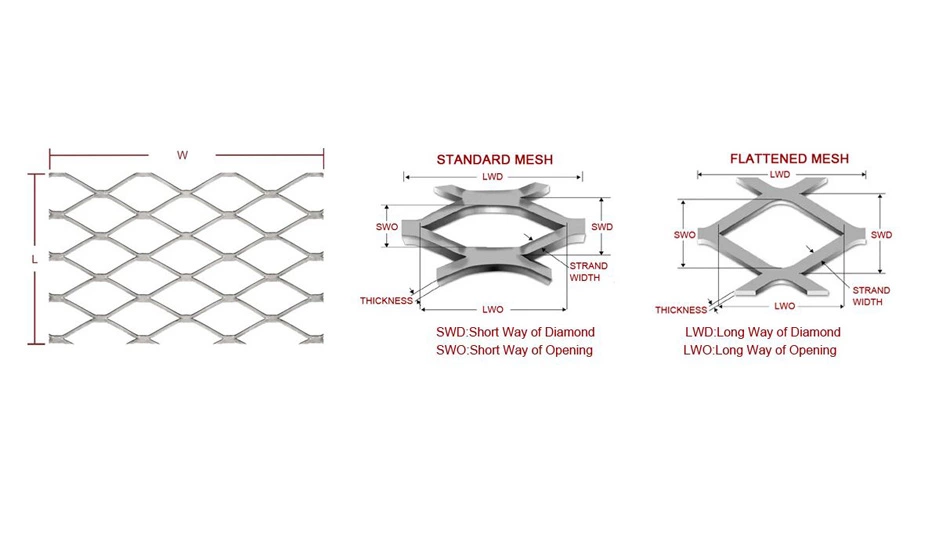
The expansion process itself is a critical phase in the production of aluminum expanded mesh. It involves cutting slits into the aluminum sheet at regular intervals, followed by stretching the sheet to create the characteristic diamond-shaped openings. This technique not only reduces the weight of the material but also enhances its structural integrity. Modern manufacturing techniques, such as computer-controlled cutting and stretching, ensure precision and consistency in the final product.
One of the primary advantages of aluminum expanded mesh is its exceptional strength-to-weight ratio. The material's unique structure provides excellent tensile strength, allowing it to withstand significant loads without deforming. Additionally, the use of high-quality aluminum alloys ensures that the mesh remains durable even under harsh conditions, such as exposure to extreme temperatures and corrosive environments.
Aluminum naturally forms a protective oxide layer on its surface, which makes it highly resistant to corrosion. This property is further enhanced in aluminum expanded mesh, as the expansion process creates a more uniform and stable surface. As a result, the mesh can be used in outdoor applications, such as façade cladding and security fencing, without the need for frequent maintenance or replacement. This longevity not only reduces costs but also minimizes environmental impact.
Aluminum is one of the most recyclable materials, and aluminum expanded mesh is no exception. The recycling process for aluminum requires significantly less energy compared to the production of new aluminum, making it an environmentally friendly choice. Furthermore, the long lifespan of aluminum expanded mesh means that it does not need to be replaced frequently, reducing waste and the overall carbon footprint.
Aluminum expanded mesh can be used in various eco-friendly applications, such as solar shading systems and green facades. These applications help reduce the energy consumption of buildings by providing natural ventilation and shade, thereby lowering the need for artificial cooling and heating. Additionally, the mesh can support the growth of climbing plants, contributing to urban greening and improving air quality.
In architecture, aluminum expanded mesh is widely used for both aesthetic and functional purposes. Its unique texture and visual appeal make it a popular choice for façade cladding, where it can be used to create striking designs and patterns. Moreover, the mesh provides excellent ventilation and light transmission, making it ideal for applications such as sunscreens and privacy screens.
Aluminum expanded mesh is also extensively used in industrial settings, particularly for safety and security purposes. It can be used to create robust guardrails, walkways, and platforms, providing a safe and non-slip surface for workers. Additionally, the mesh's high strength and durability make it suitable for applications such as machine guards and protective barriers, ensuring the safety of personnel and equipment.
To maintain the appearance and performance of aluminum expanded mesh, regular cleaning is essential. Simple cleaning methods, such as using mild soap and water, can effectively remove dirt and debris. For more stubborn stains or corrosion, specialized cleaning solutions may be required. However, it is important to avoid abrasive materials and harsh chemicals, as they can damage the protective oxide layer and reduce the mesh's lifespan.
With proper maintenance, aluminum expanded mesh can last for decades, making it a cost-effective and sustainable choice. The material's resistance to corrosion and its ability to withstand various environmental conditions contribute to its long lifespan. When replacement is necessary, the old mesh can be recycled, ensuring that the material is reused and minimizing waste. This cycle of reuse and recycling supports a circular economy and reduces the overall environmental impact.

Leave a Reply