

 English
 China
China Thailand
 Malaysia
 Vietnam
 Laos
Laos Cambodia
 Pilipinas
 Indonesia
 Russian
 Portuguese
 Arabic
 Japanese
 Spanish
 Italian
 French
 German
News
- Home
- News
- Company News
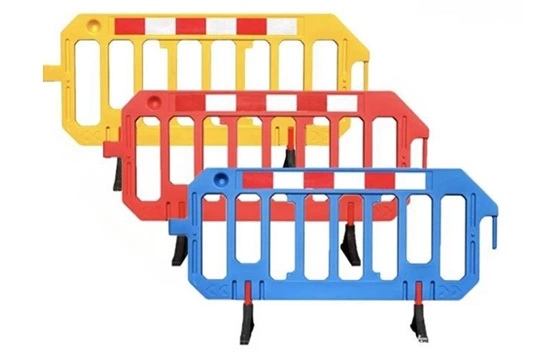
Enhancing safety in various environments, from construction sites to public events, requires not only robust but also versatile solutions. Folding plastic barricades have emerged as a popular choice due to their durability, ease of use, and cost-effectiveness. This report explores the benefits and applications of folding plastic barricades, focusing on how they enhance safety, improve operational efficiency, and provide a sustainable solution for crowd control and site management. By analyzing the structural integrity, flexibility, and environmental impact of these barricades, we aim to present a comprehensive overview of why folding plastic barricades are an indispensable tool in modern safety management.
Folding plastic barricades are typically made from high-density polyethylene (HDPE) or similar durable plastics. These materials are known for their strength, resistance to weathering, and ability to withstand heavy impacts. The use of such high-quality materials ensures that the barricades can endure harsh conditions without degrading, providing long-lasting protection.
In addition to the material, the design of folding plastic barricades is crucial for their structural integrity. Many models feature reinforced joints and interlocking mechanisms that allow for easy assembly and disassembly while maintaining stability. The interlocking design also enables the barricades to be connected in a continuous line, creating a strong and unbreakable barrier that can effectively manage crowds and delineate work zones.
One of the key advantages of folding plastic barricades is their portability. They are lightweight and designed to fold flat, making them easy to transport and store. This feature is particularly beneficial for temporary setups, such as at events or construction sites, where barriers need to be moved frequently. The lightweight nature of the barricades also reduces the physical strain on workers, enhancing overall operational efficiency.
Folding plastic barricades are highly modular, allowing for a wide range of configurations. They can be easily adjusted to fit different spaces and requirements, whether it's creating a straight line, a curve, or a more complex layout. Additionally, many barricades come with customizable options, such as reflective strips, warning signs, and even branding, making them versatile tools for various applications.
Due to their durable construction, folding plastic barricades require minimal maintenance. Unlike traditional metal barricades, which can rust and corrode over time, plastic barricades are resistant to moisture, chemicals, and UV radiation. This means they can last for years without needing replacement, reducing the long-term costs associated with frequent repairs and replacements.
While the initial investment in folding plastic barricades may be slightly higher than some other types of barriers, the long-term savings make them a cost-effective choice. The durability and low maintenance requirements mean that the total cost of ownership is significantly lower over the lifespan of the barricades. Furthermore, the ability to reuse and reconfigure the barricades for multiple projects further enhances their economic value.
Folding plastic barricades are often made from recyclable materials, such as HDPE, which can be repurposed at the end of their useful life. This reduces the amount of waste generated and contributes to a more sustainable approach to safety management. Additionally, the production process for these barricades is generally less energy-intensive compared to metal alternatives, further minimizing their environmental footprint.
The lightweight and portable nature of folding plastic barricades also contribute to a reduced carbon footprint. They require less fuel for transportation and storage, and their long lifespan means fewer replacements, resulting in lower emissions from manufacturing and disposal. By choosing folding plastic barricades, organizations can take a step towards more environmentally responsible practices without compromising on safety and functionality.
Folding plastic barricades find applications in a wide range of settings, from construction sites and roadworks to public events and sports venues. In construction, they are used to cordon off hazardous areas, protect workers, and guide pedestrian traffic. At events, they help manage crowds, create VIP areas, and ensure smooth flow and safety. Their versatility makes them a valuable asset in any environment where temporary barriers are needed.
Several case studies highlight the effectiveness of folding plastic barricades. For example, during the renovation of a major city square, folding plastic barricades were used to create a safe perimeter around the construction site. This not only protected the workers but also minimized disruption to the public. Another case involved a large music festival where the barricades were used to create designated entry and exit points, ensuring a safe and organized event. These examples demonstrate the practical benefits and real-world applications of folding plastic barricades in enhancing safety and operational efficiency.





Leave a Reply