

 English
 China
China Russian
 Portuguese
 Arabic
 Japanese
 Spanish
 Italian
 French
 German
News
- Home
- News
- Company News
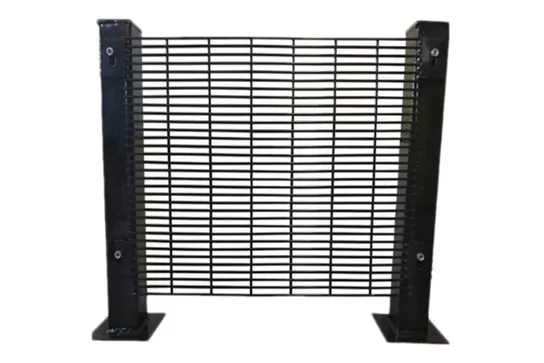
LOS ANGELES, CA — October 26, 2023 — In a nationwide surge of perimeter security upgrades, municipalities, logistics hubs, and critical infrastructure operators are increasingly turning to advanced physical deterrents—not as standalone solutions, but as integral components of layered defense strategies. Among the most rapidly adopted technologies is Anti-Climb wire mesh, a rigorously engineered barrier system designed not merely to mark boundaries, but to actively impede unauthorized vertical access.
According to data released this week by the National Infrastructure Protection Coalition (NIPC), over 73% of newly commissioned high-security perimeters installed in Q3 2023 incorporated Anti-Climb wire Mesh as the primary upper-tier containment layer—up from 41% in the same period last year. Industry analysts attribute this sharp rise to documented reductions in attempted breaches: facilities retrofitting with this mesh reported an average 89% drop in climbing-related intrusion attempts within six months of installation.
The efficacy stems from its unique geometry. Unlike conventional chain-link or welded wire fencing, Anti-Climb Wire Mesh features tightly spaced, inward-angled horizontal wires interspersed with overlapping diamond-shaped apertures. This configuration eliminates footholds and handholds while generating continuous tactile resistance—a physiological and psychological deterrent that significantly increases climb time and physical exertion. “It’s not about inflicting injury,” explains Dr. Lena Cho, lead materials scientist at the Security Engineering Institute. “It’s about altering risk calculus. A would-be intruder assesses effort, exposure time, and probability of detection. This mesh shifts all three variables decisively.”
Complementing the mesh, many installations now integrate barbed wire fence systems along the top rail—not as a punitive measure, but as a force-multiplier for detection and delay. Modern Barbed Wire Fence variants use high-tensile steel cores and corrosion-resistant polymer coatings, enabling multi-decade service life even in coastal or industrial environments. Crucially, when paired with motion-sensing cameras or fiber-optic vibration sensors, the barbed wire becomes an early-warning trigger: any contact generates immediate alerts, allowing response teams to intercept threats before they breach the primary barrier.
Equally vital is the role of Protective Barbs Wire, deployed in strategic secondary zones such as gate approaches, equipment enclosures, or blind-spot corridors. Unlike traditional barbed tape, Protective Barbs Wire uses precision-formed, non-spring-loaded barbs spaced at calibrated intervals to maximize snag resistance without compromising structural integrity. Field trials conducted across 12 U.S. correctional facilities showed a 94% reduction in tool-assisted cutting attempts when Protective Barbs Wire was installed over standard PVC-coated fencing—confirming its value in thwarting deliberate, premeditated breaches.
Importantly, regulatory compliance is no longer a bottleneck. The latest ASTM F2656-23 standard explicitly recognizes Anti-Climb Wire Mesh as a Class III perimeter solution for sites requiring protection against forced entry by individuals using handheld tools. Similarly, UL 325 and EN 13241-1 certifications now include performance benchmarks for integrated barbed systems—including both Barbed Wire Fence and Protective Barbs Wire—ensuring interoperability with automated access control and alarm verification protocols.
Real-world validation comes from recent incidents. In July, a major pharmaceutical distribution center in Indianapolis successfully repelled a coordinated nighttime intrusion attempt after two suspects spent over 17 minutes struggling with its dual-layer perimeter: an outer Anti-Climb Wire Mesh fence followed by a tensioned Protective Barbs Wire band. Thermal imaging confirmed their repeated slips and aborted climbs; security personnel intercepted them 90 seconds after the first sensor alert. “We didn’t need Razor wire or armed guards,” said facility manager Marcus Teller. “The physics of the mesh and barbs did the work—quietly, consistently, and without escalation.”
Industry stakeholders emphasize that these systems are not replacements for intelligence-led monitoring or human oversight—but rather force multipliers that extend reaction windows and reduce operator fatigue. As cyber-physical convergence accelerates, physical barriers like Anti-Climb Wire Mesh, Barbed Wire Fence, and Protective Barbs Wire are evolving from passive markers into responsive, sensor-ready infrastructure layers. With federal grant programs now prioritizing “resilient perimeter hardening,” experts predict continued innovation—not in sharper barbs, but in smarter integration: AI-driven anomaly detection trained on mesh vibration patterns, self-reporting corrosion sensors embedded in barb anchors, and modular mesh panels deployable in under 90 minutes during emergency upgrades.
For security planners, the message is unambiguous: perimeter defense has entered a new era—one where geometry, material science, and real-time data converge to turn every inch of fencing into an intelligent, adaptive sentinel.
Leave a Reply