

 English
 China
China Thailand
 Malaysia
 Vietnam
 Laos
Laos Cambodia
 Pilipinas
 Indonesia
 Russian
 Portuguese
 Arabic
 Japanese
 Spanish
 Italian
 French
 German
News
- Home
- News
- Company News
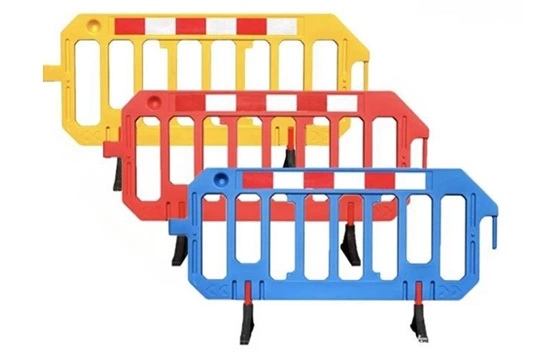
The advent of Lightweight Plastic Crowd Control barriers has significantly transformed how public spaces, events, and construction sites manage people flow and safety. This technical report delves into the versatility of Folding Plastic Barriers across a wide range of applications, highlighting their benefits, practical uses, and the advantages they bring to different environments.
One of the most significant advantages of lightweight plastic crowd control barriers is their enhanced portability. These barriers are designed with materials that are both strong and light, making them easy to transport and set up quickly. In emergency situations or during sudden changes in event logistics, this rapid deployment capability can be crucial. For instance, at a large outdoor concert, if there is an unexpected surge in attendance, security personnel can swiftly deploy these barriers to redirect the flow of people, ensuring safety and order. The ease with which these barriers can be moved and reconfigured also makes them ideal for temporary setups, such as roadwork zones or pop-up markets, where the layout may need to be adjusted frequently.
Another key benefit of folding plastic barriers is their cost-effectiveness and longevity. Unlike traditional metal barriers, which can be heavy, expensive, and prone to rust and corrosion, plastic barriers are not only lighter but also more durable in many environments. They are resistant to water, chemicals, and UV radiation, which means they can withstand harsh weather conditions and frequent use without deteriorating. This durability translates into a longer lifespan, reducing the need for frequent replacements and thereby lowering long-term costs. Additionally, the initial investment in these barriers is often lower than that of metal alternatives, making them a more economical choice for organizations and event planners.
Folding plastic barriers offer a high degree of versatility, making them suitable for a wide array of settings. In urban areas, they can be used to create pedestrian walkways, protect cyclists, or delineate parking areas. At sports events, they can be employed to manage spectator traffic, ensure VIP access, and secure restricted areas. In industrial settings, these barriers can help in creating safe work zones, guiding forklift traffic, and marking off hazardous areas. The flexibility of these barriers allows them to be adapted to various needs, whether it's a small community gathering or a large-scale public event. Their ability to fold flat when not in use also makes storage and transportation more efficient, further enhancing their utility.
In an era where sustainability is a growing concern, the environmental impact of crowd control solutions cannot be overlooked. Lightweight plastic barriers are often made from recyclable materials, which reduces their carbon footprint compared to non-recyclable alternatives. Moreover, the production process for these barriers typically involves less energy and fewer resources than that of metal barriers. This makes them a more eco-friendly option. Additionally, the durability and longevity of these barriers mean that they do not need to be replaced as frequently, reducing waste. Some manufacturers even offer recycling programs for their products, further contributing to a circular economy and promoting responsible waste management.
Safety is a paramount consideration in any crowd control scenario, and folding plastic barriers are designed with this in mind. Many models come equipped with reflective strips or bright colors, enhancing visibility and ensuring that they are easily noticeable, even in low-light conditions. This is particularly important in roadwork zones, where clear demarcation of work areas is critical for the safety of both workers and the public. The lightweight nature of these barriers also means that they are less likely to cause injury if accidentally bumped into, unlike heavier metal barriers. Furthermore, the modular design of these barriers allows for easy customization, enabling the creation of barriers of varying heights and lengths to suit specific safety requirements.
In conclusion, the versatility of folding plastic barriers in various settings is evident through their enhanced portability, cost-effectiveness, and adaptability to diverse environments. Their environmental benefits and improved safety features make them a compelling choice for modern crowd control needs. As technology continues to advance, it is likely that these barriers will become even more innovative, offering even greater benefits and further expanding their applications.

Leave a Reply