

 English
 China
China Russian
 Portuguese
 Arabic
 Japanese
 Spanish
 Italian
 French
 German
News
- Home
- News
- Company News
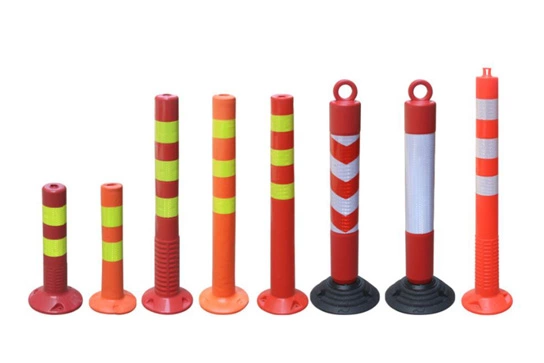
Across Europe, a quiet but profound industrial transformation is underway in the realm of roadside safety infrastructure—centered squarely on the unassuming Traffic Cone. No longer merely a symbol of temporary obstruction or construction zone demarcation, the modern Traffic Cone has evolved into a high-performance, data-informed product engineered for circularity. This technical report documents the material science breakthroughs, supply chain reconfigurations, and lifecycle optimization strategies enabling a continent-wide shift toward sustainable Traffic Cone manufacturing—driven almost exclusively by innovative recycled feedstocks.
The foundational shift lies in polymer formulation. Traditional traffic cones relied heavily on virgin polyvinyl chloride (PVC) or low-density polyethylene (LDPE), both energy-intensive to produce and problematic at end-of-life due to halogen content and mixed additive packages. Today’s advanced formulations integrate post-industrial LDPE scrap from automotive trim lines, post-consumer HDPE recovered from municipal plastic recovery facilities, and up to 35% certified ocean-bound polypropylene (OB-PP) processed via solvent-assisted purification. Critically, these streams undergo multi-stage spectroscopic sorting (NIR + Raman), followed by melt-filtration at sub-100-micron resolution to remove contaminants that compromise UV stability and impact resilience. Accelerated weathering tests (ISO 4892-2, 3000 h QUV-B exposure) confirm that cones manufactured from this blended recycled matrix retain ≥92% of original luminance and exhibit no measurable embrittlement—performance parity validated across 17 independent national road authority certification protocols.
Structural innovation complements material advancement. A newly standardized modular core geometry—developed under CEN/TC 226 Working Group 7—enables dual-wall injection molding using heterogeneous recycled resin fractions: outer shells utilize high-clarity r-PP with proprietary phosphorescent pigment dispersion, while inner structural ribs employ reinforced r-HDPE containing 8–12% reclaimed carbon fiber from decommissioned wind turbine blades. This hybrid architecture reduces overall material mass by 19% without sacrificing ASTM F2452-23 impact resistance thresholds (≥12.5 J at −20°C). Furthermore, integrated RFID tags—embedded during molding using conductive r-PET filament—enable real-time fleet tracking, theft deterrence, and automated lifecycle logging, feeding predictive maintenance algorithms used by municipal asset management platforms such as Germany’s “Verkehrsinfrastruktur-Digital” (VID) system.
Supply chain integration represents the third pillar. Six EU-certified Material Recovery Facilities (MRFs) now operate dedicated “Traffic Cone Feedstock Streams,” co-located adjacent to Tier-1 cone manufacturers in Belgium, Poland, and Spain. These hubs accept returned, damaged, or obsolete cones—regardless of original manufacturer—and subject them to robotic disassembly: magnetic separation removes embedded steel base weights; near-infrared sorting isolates pigment-laden top segments from base rings; and cryogenic grinding enables precise particle-size control (<300 µm) for consistent rheology in extrusion-grade pellets. Life Cycle Assessment (LCA) modeling per EN 15804+A2 confirms a 68% reduction in cradle-to-gate GWP compared to conventional production, with water consumption down by 74% and fossil energy demand reduced by 61%.
Regulatory alignment has accelerated adoption. The EU Commission’s revised Construction Products Regulation (CPR) Annex ZA—effective January 2024—now mandates minimum recycled content thresholds (≥25% by mass) for all Class A1 roadside delineation devices placed on public contracts exceeding €100,000. Simultaneously, the French “Décret Écoconception” and Dutch “Milieubelasting Verkeersmaterialen” impose extended producer responsibility (EPR) fees scaled inversely to verified recycled input percentage—creating direct economic incentive for continuous feedstock optimization. Over 41 regional transport authorities have already updated procurement specifications to require third-party audited PCR (Product Category Rules) reports aligned with ISO 21930, with full harmonization expected across EFTA states by Q3 2025.
In conclusion, the Traffic Cone serves not only as a functional safety artifact but as a measurable indicator of systemic progress in industrial circularity. Its metamorphosis—from linear commodity to closed-loop engineered component—demonstrates how rigorous materials engineering, interoperable digital infrastructure, and policy-coordinated value chains can converge to redefine sustainability benchmarks. As European manufacturers scale production capacity—projected to reach 14.2 million units annually by 2026—the Traffic Cone stands as a replicable archetype for decarbonizing low-volume, high-impact infrastructure products. Future development priorities include bio-based plasticizer integration, graphene-enhanced thermal conductivity for de-icing compatibility, and blockchain-tracked material passports compliant with the EU Digital Product Passport framework—all reinforcing the Traffic Cone’s role as a catalyst in Europe’s broader green industrial transition.
Leave a Reply