

 English
 China
China Thailand
 Malaysia
 Vietnam
 Laos
Laos Cambodia
 Pilipinas
 Indonesia
 Russian
 Portuguese
 Arabic
 Japanese
 Spanish
 Italian
 French
 German
News
- Home
- News
- Company News
In the modern urban landscape, safety is a paramount concern for both pedestrians and drivers. One of the most effective tools in enhancing this safety is the Durable Plastic Barrier. These barriers, often seen on roadsides, construction sites, and event venues, play a crucial role in traffic management and pedestrian protection. This report will explore how Plastic Street Barriers improve safety, focusing on their durability, visibility, and adaptability.
The primary advantage of using durable plastic barriers is their long-term resilience. Unlike traditional materials such as concrete or metal, which can corrode or degrade over time, plastic barriers are resistant to weathering, UV radiation, and chemical exposure. This durability ensures that the barriers maintain their structural integrity and effectiveness for extended periods, reducing the need for frequent replacements and maintenance. Additionally, the lightweight nature of plastic makes these barriers easy to transport and install, further contributing to their cost-effectiveness.
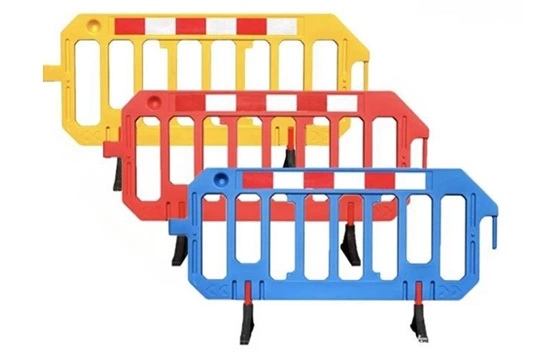
Visibility is a critical factor in ensuring the safety of both pedestrians and drivers. Durable plastic barriers are often designed with high-visibility features, such as bright colors and reflective strips, making them easily noticeable even in low-light conditions. This increased visibility helps to alert drivers to potential hazards, such as roadwork or pedestrian crossings, thereby reducing the risk of accidents. Moreover, the use of contrasting colors and patterns on the barriers can help to delineate different areas, such as walkways and vehicle lanes, further enhancing the overall safety of the environment.
One of the key benefits of durable plastic barriers is their versatility. These barriers can be used in a wide range of applications, from temporary traffic control at construction sites to permanent installations in urban areas. The modular design of many plastic barriers allows them to be easily connected and configured to suit specific needs, whether it’s creating a continuous barrier along a busy street or setting up a temporary walkway at an event. This adaptability ensures that the barriers can be effectively deployed in various scenarios, providing a flexible solution for enhancing safety in diverse environments.
From an economic perspective, durable plastic barriers offer a cost-effective solution for improving urban safety. The initial investment in these barriers is typically lower than that of more traditional materials, and their long lifespan and minimal maintenance requirements result in significant cost savings over time. Furthermore, the ease of installation and reconfiguration means that these barriers can be quickly adapted to changing needs, reducing the need for additional resources and labor. This cost-effectiveness makes durable plastic barriers an attractive option for municipalities, construction companies, and event organizers looking to enhance safety without breaking the budget.
In addition to their practical benefits, durable plastic barriers also offer environmental advantages. Many modern plastic barriers are made from recycled materials, reducing the demand for new raw materials and minimizing waste. Additionally, the long lifespan of these barriers means that they do not need to be frequently replaced, further reducing their environmental impact. Some manufacturers also offer recycling programs for their products, ensuring that the barriers can be responsibly disposed of at the end of their life cycle. By choosing durable plastic barriers, organizations can contribute to sustainability efforts while still achieving their safety goals.
In conclusion, durable plastic barriers are a valuable tool in enhancing the safety of both pedestrians and drivers in urban environments. Their enhanced durability, increased visibility, adaptability, cost-effectiveness, and environmental considerations make them an excellent choice for a wide range of applications. As cities continue to grow and evolve, the use of durable plastic barriers will play an increasingly important role in creating safer, more sustainable urban spaces.

Leave a Reply