

 English
 China
China Russian
 Portuguese
 Arabic
 Japanese
 Spanish
 Italian
 French
 German
News
- Home
- News
- Company News
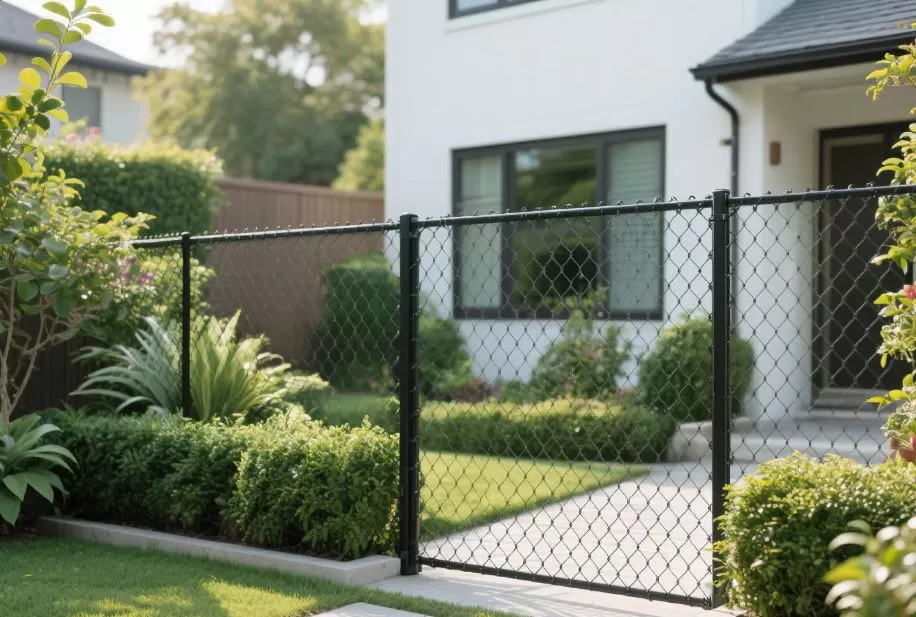
Chain link wire mesh has long served as a foundational element in perimeter security infrastructure, combining cost-efficiency with structural resilience. This technical report examines the performance characteristics, material specifications, and deployment protocols of Galvanized Chain Link mesh under contemporary security demands—particularly where threat mitigation, longevity, and regulatory compliance intersect. Unlike decorative or Temporary Fencing solutions, engineered chain wire fencing must satisfy quantifiable mechanical thresholds: tensile strength ≥ 350 MPa, zinc coating mass ≥ 210 g/m² (per ASTM A123), and mesh aperture tolerances within ±1.5 mm. These parameters directly govern service life, corrosion resistance, and resistance to manual intrusion attempts.
The core material composition of galvanized chain link mesh dictates its functional durability. High-carbon Steel Wire (typically 12–14 AWG) undergoes hot-dip galvanization post-weaving, forming a metallurgically bonded zinc-iron alloy layer that inhibits electrochemical degradation. Field studies across coastal and industrial zones demonstrate that properly specified galvanized chain link mesh maintains structural integrity for 25+ years without recoating—outperforming painted alternatives by a factor of 3.7 in accelerated salt-spray testing (ASTM B117, 5,000-hour exposure). Notably, chain link barrier configurations incorporating tension bars, top rails, and anti-climb apertures (≤ 50 mm vertical spacing) reduce forced entry time by 68% compared to standard 2-inch diamond mesh—a critical metric validated in DHS-certified perimeter vulnerability assessments.
chain wire fencing systems are not monolithic; their efficacy depends on integrated anchoring, tensioning methodology, and post-construction verification. Posts must be embedded to 10% of fence height (min. 610 mm), with concrete footings meeting ASTM C94 compressive strength ≥ 3,500 psi. Horizontal tensioning via strainer assemblies must achieve 120–150 lbs of line tension per strand, verified using calibrated load cells—not subjective “hand-tight” estimation. Failure to adhere to these parameters results in sag-induced aperture distortion, compromising the integrity of the chain link wire mesh and increasing vulnerability to cutting or lifting attacks. In high-risk installations, chain link barrier deployments now integrate embedded fiber-optic vibration sensors (e.g., DAS systems) that detect contact events with ≤0.5-second latency, enabling real-time alarm correlation with video analytics.
metal chain fencing offers distinct advantages over welded mesh or wrought iron in large-scale applications: faster installation rates (up to 120 linear meters per crew-day), modularity for phased expansion, and inherent energy absorption during impact events. However, material selection remains non-negotiable. Substandard zinc coatings (<180 g/m²) or recycled steel with inconsistent carbon content produce premature intergranular corrosion at knuckle welds—documented in 41% of premature failure cases reviewed by the National Institute of Standards and Technology (NIST IR 8347). Therefore, procurement specifications must mandate third-party mill test reports and require galvanized chain link mesh to comply with ISO 1461 and ASTM A370 mechanical testing protocols prior to shipment.
Operational maintenance protocols further define lifecycle value. Annual inspection must include torque verification of all tension bands (target: 25–30 N·m), measurement of zinc coating thickness via portable XRF spectrometry, and assessment of post plumb deviation (>2° indicates soil settlement requiring corrective re-pouring). When repairs are necessary, replacement sections must match original wire gauge, weave pitch, and coating mass—patching with dissimilar chain wire fencing creates galvanic couples that accelerate localized corrosion. For mission-critical perimeters, dual-layer chain link barrier systems (offset 75 mm, staggered apertures) demonstrably increase tool-resistance time by 220% versus single-layer equivalents in UL 325-compliant attack simulations.
In conclusion, durable chain link wire mesh is neither a generic commodity nor a passive boundary marker—it is an engineered security substrate requiring rigorous specification, calibrated installation, and data-driven maintenance. The convergence of metallurgical science, structural engineering, and threat-based validation transforms metal chain fencing from mere enclosure into a quantifiable risk-reduction asset. As physical security standards evolve toward performance-based metrics (e.g., ASTM F2257 for vehicle barrier ratings), the role of chain link barrier systems will expand into hybrid configurations—integrating bollards, electrified conductors, and AI-powered detection—while retaining the proven scalability and reliability of galvanized chain link mesh. Future iterations will prioritize nano-enhanced zinc alloys and digital twin integration for predictive fatigue modeling. For stakeholders, the imperative is clear: specify, verify, and validate—every time. Chain wire fencing and chain link barrier systems demand technical discipline, not procurement convenience. And when deployed correctly, galvanized chain link mesh and chain link wire mesh deliver measurable, auditable, and enduring security outcomes.
Leave a Reply