

 English
 China
China Thailand
 Malaysia
 Vietnam
 Laos
Laos Cambodia
 Pilipinas
 Indonesia
 Russian
 Portuguese
 Arabic
 Japanese
 Spanish
 Italian
 French
 German
News
- Home
- News
- Company News
With the increasing demand for safety in public and industrial environments, Plastic Safety Barriers have emerged as a versatile and effective solution. These barriers are designed to protect people, property, and infrastructure from potential hazards, especially in high-traffic areas. This report delves into the various applications and benefits of plastic safety barriers, providing insights on their optimal use and deployment.
Plastic safety barriers are typically made from durable, high-density polyethylene (HDPE) or other robust polymers that can withstand significant impact forces. The material properties of these barriers, such as flexibility, UV resistance, and chemical resistance, make them suitable for a wide range of environments. Additionally, the modular design of plastic safety barriers allows for easy installation and reconfiguration, making them ideal for dynamic spaces where traffic patterns may change frequently.
When selecting a plastic safety barrier, it is essential to consider the specific requirements of the area. Factors such as the expected level of traffic, the types of vehicles or machinery present, and the potential for exposure to harsh environmental conditions should all be taken into account. For example, in an industrial setting, the barrier may need to be more robust to withstand the impact of heavy machinery, while in a retail environment, aesthetics and ease of movement may be more important.
High-traffic areas, such as parking lots, warehouses, and construction sites, pose significant safety risks due to the high volume of pedestrian and vehicular traffic. Plastic safety barriers play a crucial role in mitigating these risks by clearly delineating walkways, work zones, and hazardous areas. By creating physical boundaries, these barriers help to prevent accidents and ensure that both pedestrians and drivers are aware of their surroundings.
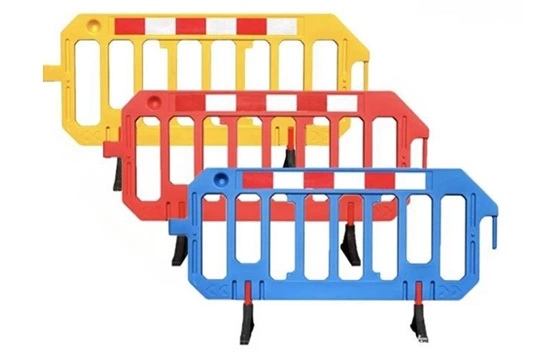
In addition to their primary function of providing a physical barrier, plastic safety barriers can also be used to enhance visibility. Many barriers come with reflective strips or are available in bright, high-visibility colors, making them easily noticeable even in low-light conditions. This is particularly important in areas where lighting may be limited, such as at night or in poorly lit indoor spaces.
Moreover, the use of plastic safety barriers in high-traffic areas can also contribute to overall operational efficiency. By clearly marking out designated areas, these barriers help to streamline traffic flow and reduce congestion. This not only improves safety but also enhances productivity, as workers and visitors can move through the area more efficiently.
One of the key advantages of plastic safety barriers is their cost-effectiveness. Compared to traditional materials such as metal or concrete, plastic barriers are generally less expensive to purchase and install. Additionally, their lightweight nature makes them easier to handle and transport, reducing labor costs and installation time.
The longevity of plastic safety barriers is another factor that contributes to their cost-effectiveness. When properly maintained, these barriers can last for many years, even in harsh outdoor conditions. They are resistant to corrosion, rust, and other forms of degradation that can affect metal barriers, and they do not require regular painting or maintenance. This long-term durability translates into lower replacement and maintenance costs over the life of the barrier.
Furthermore, the modular design of plastic safety barriers allows for easy repair and replacement of individual components. If a section of the barrier is damaged, it can be quickly and easily replaced without the need to replace the entire system. This not only reduces downtime but also minimizes the overall cost of maintaining the barrier.
As sustainability becomes an increasingly important consideration in many industries, the environmental impact of safety solutions is also coming under scrutiny. Plastic safety barriers offer several environmental benefits compared to traditional materials. Firstly, the production of plastic barriers requires less energy and generates fewer emissions than the production of metal or concrete barriers. This makes them a more environmentally friendly option in terms of manufacturing.
Additionally, many plastic safety barriers are made from recycled materials and can themselves be recycled at the end of their useful life. This closed-loop approach to material use helps to reduce waste and minimize the environmental footprint of the barrier. Furthermore, the durability and long lifespan of plastic barriers mean that they need to be replaced less frequently, further reducing the overall environmental impact.
It is also worth noting that the use of plastic safety barriers can contribute to the overall sustainability of a facility. By improving safety and operational efficiency, these barriers can help to reduce the risk of accidents and injuries, which can have significant economic and environmental consequences. For example, a workplace accident can result in lost productivity, increased insurance costs, and potential legal liabilities, all of which can have a negative impact on the environment.
The effective use of plastic safety barriers in high-traffic areas is a critical component of any comprehensive safety strategy. These barriers offer a combination of durability, versatility, and cost-effectiveness that makes them an ideal solution for a wide range of applications. By considering the specific needs of the area and selecting the appropriate type of barrier, organizations can significantly enhance safety, improve operational efficiency, and contribute to sustainability. As the demand for safe and efficient environments continues to grow, the role of plastic safety barriers will only become more important.

Leave a Reply